
Wingfoiling is an exciting sport that blends surfing, windsurfing, and kitesurfing. To get the most out of it and avoid getting hurt, especially with back pain, it’s really important to have the right wingfoil stance. This guide will show you how to keep your body safe and improve your wingfoiling by using the correct body posture.
The term “wingfoil stance” refers to the specific body position and posture a rider adopts while wingfoiling. Wingfoiling is a watersport that combines elements of different other watersports. The rider stands on a board equipped with a hydrofoil and uses a handheld wing to catch the wind. The body posture is crucial for maintaining balance, controlling the board, and efficiently harnessing the wind power. The right way of standing on the board is also very important when it comes to avoiding injury.

The right body position helps avoid injuries
Why a good wingfoil stance matters
Having the right wingfoil stance is super important because it helps you control the board better, keeps you balanced, and stops you from straining your muscles and joints. If you don’t stand right, you could end up with sore muscles or even serious injuries.
Disclaimer about this page: this is my personal experience. I am not a doctor and I am not claiming this is medical advise. It’s always recommended to speak to a specialist about your specific body and what works for you.
Key parts of a good wingfoil stance
The right body posture helps you to ride long sessions without causing problems in your back, shoulders, arms and other body parts. It also allows you to relax while riding, which makes you ride better.
- Bend your knees slightly: This helps you stay balanced and absorb shocks from waves and wind. If you lock your knees in a legs-straight-position, you cannot anticipate any waves coming in.
- Keep your shoulders back: This will help you keep your back straight and avoid hunching over, which can cause back pain. You don’t want your arms pulling your shoulders in a curve towards your chest, because that’s not good for your shoulders.
- Keep your arms slightly bent: This makes it easier to control the wing and stops you from getting tired too quickly. You need to have margin to pull the wing towards your body. You also need margin to move the wing away when needed. For this margin to be there, you need your arms to be slightly bent.
- Keep your back straight: A straight back spreads out the stress evenly, which helps prevent back pain. It’s also a great way to strengthen the core muscles on your body and your lower back.
- Keep your board flat: When flying and when taxiing, your board should be horizontal and flat. This means that your foil is also horizontal and flat. That optimises flow on the foil and speed on the water, requiring less force on your muscles. Note: when you go upwind, you can assume a position where you push on the foil to go upwind, thereby forcing it to incline.
- Relax: A key element in having the right wingfoil stance is to relax. It’s not uncommon to be very tense and have an extremely high hear rate when you get on the foil. The pumping and the excitement (and fear) causes this. Once you are on the foil, focus on your breathing to bring your heart rate down. Meanwhile, try to asume a relaxed posture so your muscles don’t tense up. This makes you ride better.
All nice talk, show it to me!
That’s right. So now we show it with images, as a picture makes things so much clearer. Let’s go into what that correct posture looks like, and what it looks like when you have a posture that can be improved.
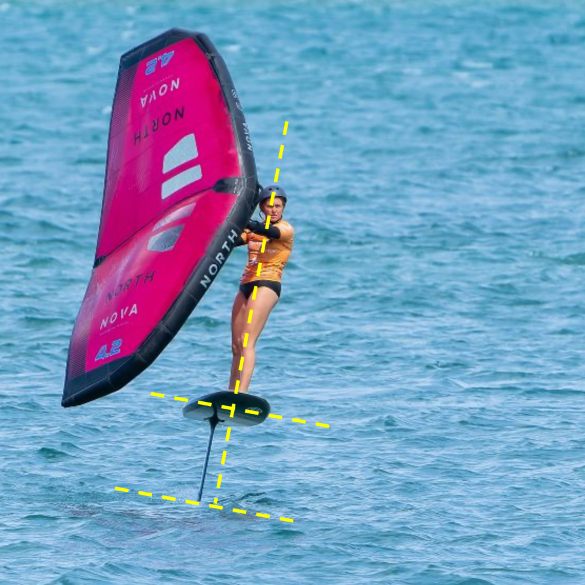
The basic rule for wing foil posture
If you would draw a straight line from the foil up, your body should be inline with your foil.
This makes sure your centre of gravity is in line with the mast and thus with the foil.
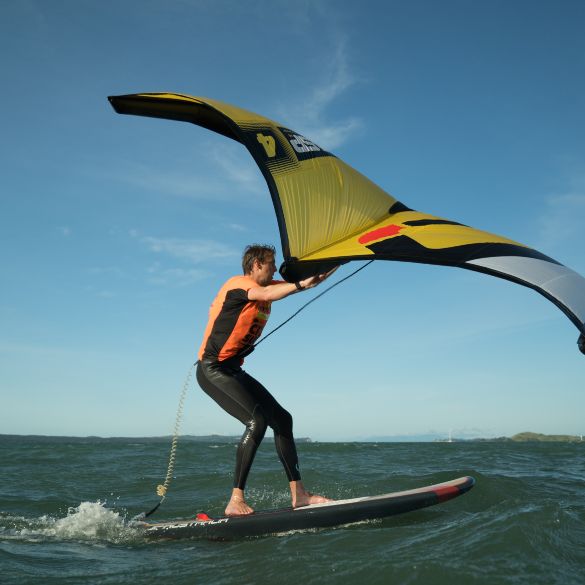
This rider has a good posture
His arms are straight but not entirely, his back is straight, his legs are slightly bent to absorb waves, he’s relaxed.
One thing is true though, he rides in very smooth conditions which allows him to relax very well.
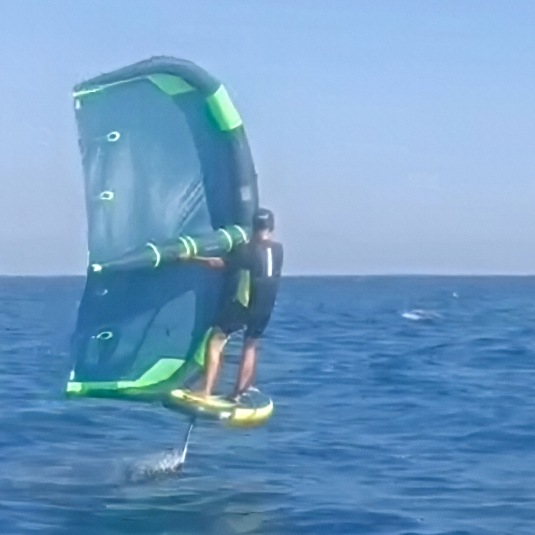
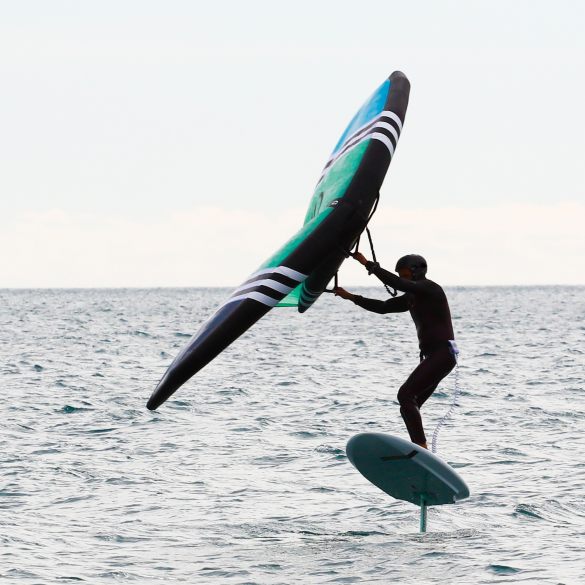
This wingfoil stance can be improved
Riding like this, where you are reaching for the wing and you are tense, is not sustainable for a long time.
Push the nose of the board down when it pitches up like this. You will see it will speed up and you fly better.
Don’t curve backwards
If you notice you are about to fall backwards, sometimes it’s better to just fall backwards.
Trying to counter it by making a move like the one you see here may result in sudden pain in your back.
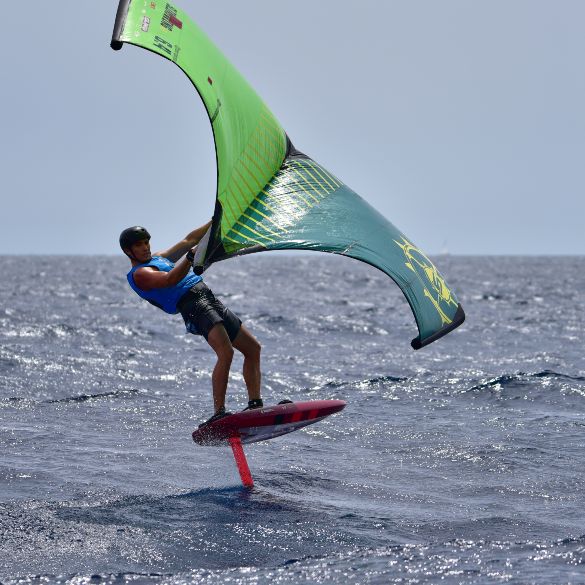
Don’t bend over
Standing like this may hurt your back. You want your back to be in in a straight line with the mast of the foil.
If you have to pump to get on the foil, use your arms and legs but not your back.
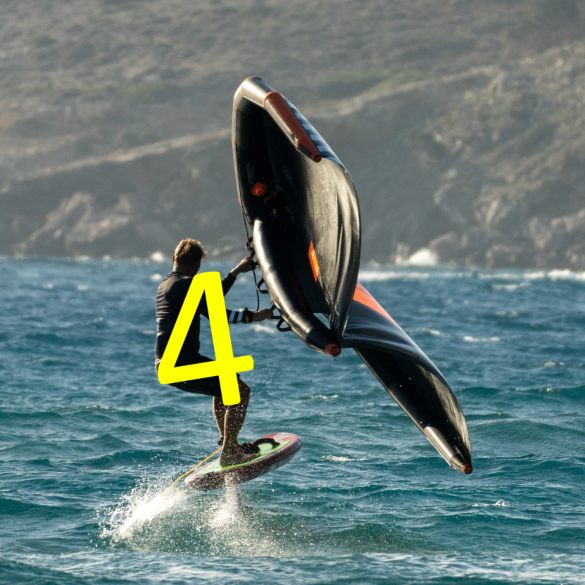
When you ride in choppy water
When you ride in stormy, choppy or gusty conditions, asuming a position like a 4 may be a good idea.
You bend your knees further so you can absorb the waves, you keep your back straight and your arms a little bit more flexed. This gives you flexibility to respond to gusts and waves.
Wing foil posture bonus tip: warm up before getting in
Warming up before you get into the water is crucial for preventing injuries. It may not look very cool to be doing squats on the beach, but it can help you from getting in trouble. Wingfoil can be very intense from the get go, so to go from zero to 100 on the scale of load on your muscles and body is not a good idea. Especially if you’re over 40 and, like most of us, already know the agony of back pain.
Here are five simple warm-up exercises to get you ready:
- Do some squats: Stand with your feet shoulder-width apart and squat down like you’re sitting in a chair. Stand back up. This warms up your legs and knees.
- Arm circles: Stretch your arms out to the sides and make big circles with them. This gets your shoulders ready.
- Back twists: Place your hands on your hips and gently twist your upper body from side to side. This loosens up your back.
- Jog in place: A quick jog on the spot can get your heart rate up and your blood flowing.
- Stretch your calves: Stand at arm’s length from a wall. Put one foot behind you, keeping it flat on the ground. Lean forward towards the wall to stretch the calf of the back leg.
Conclusion
Standing correctly while wingfoiling isn’t just about improving how well you perform; it’s crucial for staying safe and keeping injury-free. Focus on keeping your knees bent, shoulders back, arms slightly bent, and your back straight. Warm up before you start, and you’ll have a much better time on the water. Keep practicing, and consider getting some professional coaching to really perfect your stance. Enjoy wingfoiling safely and have fun out there on the waves!

