
In this article, we will go into safety aspects of wingfoiling.
Like any watersport, in the case of wingfoil safety is extremely important. When riding, you are in a thrilling and beautiful but also unfriendly environment (on the water). You want to minimise the risk of injury or having to wait for rescue. Improving your odds for a great session can help you avoid mishaps. In this handy Wingfoil safety guide, we give you free tips and good-to-know pointers for a hassle-free session.
Remember, safety should always be a top priority in wingfoiling. By following these safety tips and continuously educating yourself on safe practices, you can enjoy the excitement of wingfoiling while minimising risks and ensuring a memorable and secure experience on the water.
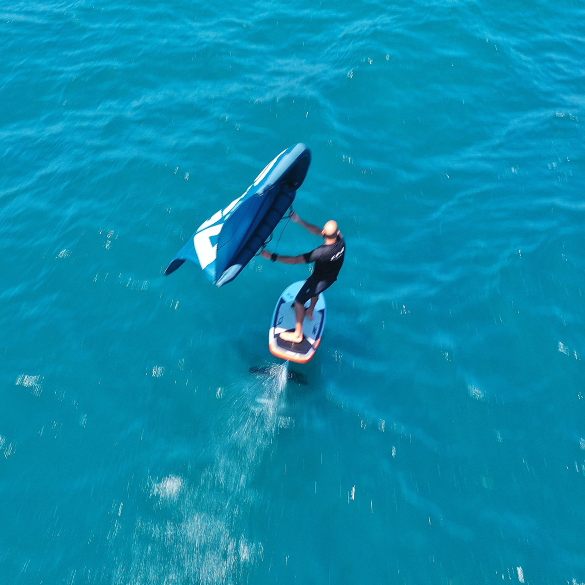
Enjoy and be safe
Wingfoil is absolutely thrilling! Especially when you feel safe.
Being aware of safety will become your second nature when riding. Once you have done a couple of sessions, it’s in your system and you will be just focused on enjoying your ride.
In the beginning of learning curve, it may be a good idea to make a small checklist that you use just before you leave your home and just before you get in the water.
Your home checklist consists of all the things you need to bring to the beach. Your on-the-beach-pre-departure checklist consists of a list of your gear to bring in the water.
14 Wingfoil safety tips
- Use a helmet
Ten years ago, nobody was wearing helmets on the ski slopes. Nowadays, everybody wears a helmet. The same goes for surfing sports. Remember that the foil is essentially a knife cutting through the water. Even a light impact of the foil on your head can leave you with 10 stitches you could have avoided with a helmet. This can even happen if you are on calm water, walking in the shoreline. Or when you just walk on the beach and a sudden gust of wind grabs a hold of your board. - Use an impact vest
For the same reasons you should use a helmet, you should use an impact vest. Firstly, an impact vest will protect you from impacts with your board and your foil. After all, you are riding on a certain altitude from the water, so if you fall, the impact can be considerable. Especially when you are working on learning new tricks, jibes, turning, getting on the foil, you may fall more often. And that’s perfectly normal! Just if and when that happens, you will be thankful for having bought that impact vest.
Secondly, an impact vest gives you warmth in colder conditions. After all, it is an extra layer that’s stuffed with protective material. In colder conditions, an impact vest gives you a feeling of safety and warmth, which is always good on the water. - Make sure you have a good leash connected to the board and the wing
Being connected to your gear is very important. You would not be the first rider to be surprised by the speed your board picks up when it’s drifting away from you. When you walk with your wing, always have the leash connected to your wrist! You do not want to lose your wing in a gust of wind just because you did not connect the leash. Remember, a good leash does not hurt your skin and does not create any irritations. It should fit in a tight and comfortable way around your wrist or ankle. Make sure you connect the leash to the wing and board as it is described in the manual. - Bring your mobile phone with you – in a watertight carrier
Especially if you ride alone, make sure you have our mobile phone with you. There are very good, none-expensive, watertight phone carriers that you can bring with you. If needed, you want to be able to call somebody even from being out on the water. - Let someone know when you get in the water and where you are
Of course, probably nothing will happen to you. But you are out on the water, so just make sure somebody knows where you are and how long you plan to be out there. This will help you in case something does happen. - Stay hydrated
Wingfoil is an intensive sport, so you burn a lot of calories during a session. Also, once you are riding and enjoying yourself, time flies like you fly on the water! Before you know it, you are out there for two hours. That’s one of the aspects that make wingfoil such a great sport and why it’s so popular. And this is great.
Just make sure to stay hydrated. Either lay a bottle of water on the shore where you get in the water, or bring a hydration device with you. There are very useful water carriers out there that you can use. - Use sun protection
On the water, the sun is stronger than on land. This is because it shines on you from the sky and it reflects on you from the water. Using a waterproof SPF 50 is a very good idea. Reapply regularly. If you ride in shorts, remember to pay attention to the back of your legs: your calves and the hollow of your knees, as that’s where the sun reflects a lot. - Check and be aware of your surroundings
In short: you want to know where you are and have a reference point so you can see where to go back to. A flag pole, a buildling, another point of recognition you can see from when you’re out on the water. Secondly, you want to see where the wind blows to, so you know if you can get out of the water and walk back if you drift off. Identify any hazards out there: fishery gear in the water, rocks, reefs, boat traffic and any other things you want to stay far away from. All checked? Go! - Wear a wetsuit
The importance of a wetsuit is probably clear. It protects you from the sun, from the cold, from jellyfish and unfriendly plants in the water. Especially if you stay out there for a longer time, the wetsuit is a huge help. Buy a wetsuit from a good brand, and make sure you get one that’s suitable for wingfoiling. - Make sure you stay warm
On the water, the body loses heat much faster than on land. This becomes relevant when temperatures are lower or when you have a problem. If you ride in colder conditions, consider putting on an extra layer of clothing in the shape of a wetsuit, an impact vest or a swim shirt. Consider bringing a thermoflask with a hot drink that you have on the shore. - Don’t go out with off-shore winds
It’s just not worth it. If you break your equipment or you fall badly, you don’t want to be fighting the wind to struggle yourself back to shore. - Learn how to manage your equipment
It’s important to know how to walk into and out of the water, how to manipulate your equipment on land and how to do all this safely. Read more about getting into the water safely. Use your helmet and impact vest on the beach as well, as a sudden gust of wind may surprise you with the movement of your wing, board and foil. - Extreme conditions? Think twice
On days with extreme conditions, it may just no be worth it. A hefty shorebreak can get your gear broken and yourself hurt in seconds. The same goes for big waves out there, or very strong winds. While wingfoiling is fantastic, it is a high-risk sport. - Speak to the locals
It’s always a good idea to ask the locals what you should know before getting into the water. They know where to go, what to stay away from and why.
Falling without getting hurt
One thing is for sure: your wingfoil learning curve comes with a lot of falling and getting up again. Remember in life and in wingfoil there is one rule about this: it’s not about the amount of times you fall, but about the amount of times you get up again.
Learn how to fall: try to fall as far away from your board and foil as possible. Use your arms to protect your face while you fall.
An impact vest and a helmet are important, as they will protect your body when you fall.


Safety tips for your first sessions
Before your first session, learn how to control the wing.
Begin your wingfoiling journey in safe and controlled conditions. Choose a location with calm waters, minimal obstacles, and around 15 knots wind speeds.
This will allow you to develop your skills and gain confidence before venturing into more challenging environments.
Be sure to read our tutorial with beginner mistakes before you go out, as well as our safety guide for wingfoilers.
Walking on the beach safely
Learn how to walk with your gear. It allows you to get into the water and back out of the water without damaging it.
The typical way to walk with your wingfoil gear safely is to have the foil point towards the wind, and have your wing on the other side of your body. Your wing is carried by the wind so it’s not dragging on the ground.


